AI in Medical Device Software Engineering

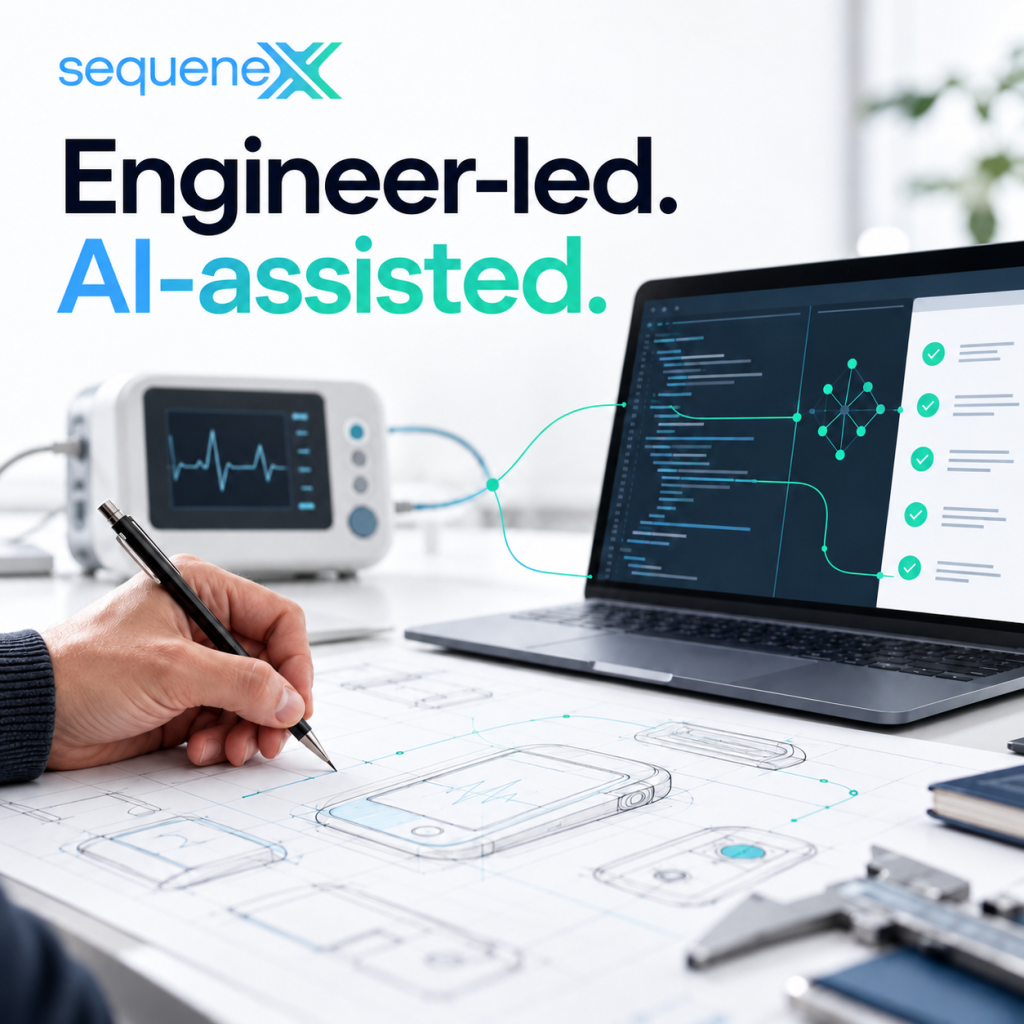
Design first. Develop and document in parallel with AI.
Design, Code, Test
We build in that order, and the order is the point.
Design
Intended use, requirements, architecture, and risk controls defined before implementation begins.
Code
Code implements a specified design, to the coding standards and under review.
Test
Tests derive from the requirements they verify, so the trace already exists.
Three places AI earns its place
- Once engineers have defined the interfaces, the data models, and the design, writing the code that implements them is faster with AI assistance. Generated code still has to conform to the specified design, meet the coding standards, and pass the same review and verification as anything else in the IEC 62304 software lifecycle. Speed inside a defined design is an efficiency gain. Speed without one is a liability.
02
Accelerating Design and Documentation
Producing requirements, design descriptions, risk analyses, and the other records that make up the design history file is detailed work, and AI can accelerate the drafting, the formatting, and the consistency checking. What it does not do is make the decisions. An engineer determines the intended use, the architecture, the hazards, and the controls. AI helps get that thinking onto the page faster. The thinking remains human.03
Auditing and Completeness Checking
This is where machine assistance is strongest, because the task is systematic and exhaustive rather than judgment based. Checking that every requirement traces to a test. Checking that every risk control is implemented and verified. Checking that a design history file contains what the checklist requires, with nothing missing and no unsigned records. It builds on the same principle as automated documentation: let the system find the gaps, and let people close them.
What AI Does Not Do Here
The limits are part of the offer
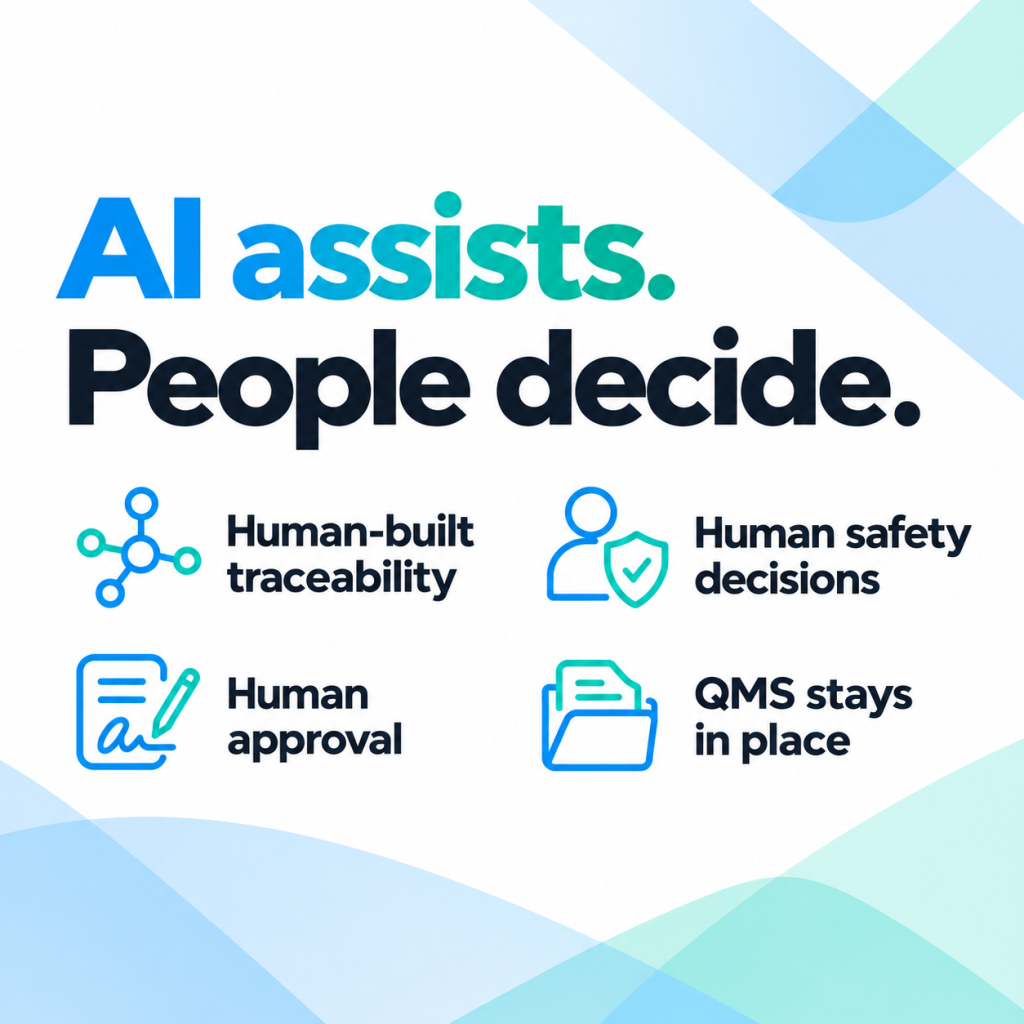
Engineers do, by working in an order that creates it. AI can verify that the trace is complete. It cannot substitute for the sequence that generated it.
Intended use, software safety classification, risk acceptability, clinical claims, and release approval are determined by qualified people.
No AI output reaches a regulated deliverable without review and approval by a person accountable for it. Nothing is signed by a machine.
All AI-assisted activity happens inside our ISO 13485-certified quality management system, the standard FDA’s QMSR incorporates by reference, under established controlled processes, with lifecycle practices aligned to IEC 62304.