
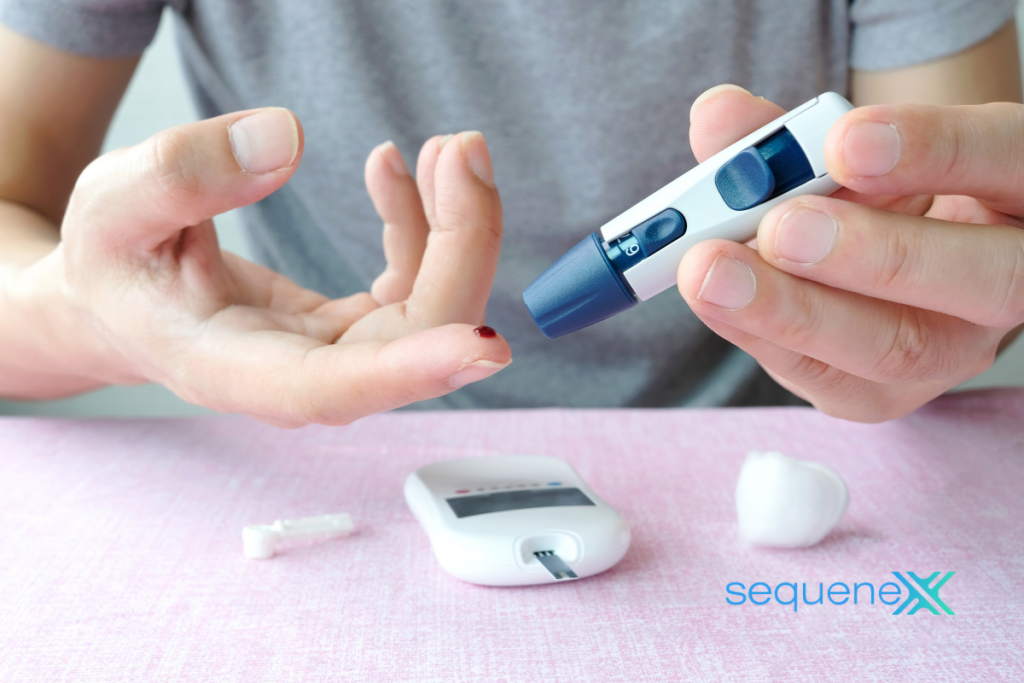
AI in diabetes devices appears in three areas: automated insulin delivery (AID) algorithms that adjust insulin every few minutes, glucose prediction features that warn of highs and lows before they occur, and dosing decision support that recommends insulin doses. FDA does not regulate these based on whether a company calls them AI. It regulates each based on what the software does, and most are Class II devices with their own classification. As of October 2026, no AID algorithm or CGM appears on FDA’s list of AI-enabled medical devices, even though several companies describe their algorithms as adaptive, self-learning, or AI-based.
This guide is for device makers, product leaders, and regulatory teams. It explains how each type of algorithm works, which FDA rules apply to it, and what that means for anyone building in this space.
Is it AI? Control algorithms vs machine learning
Much of what gets called AI in diabetes technology is control software: mathematical models that predict where glucose is heading and adjust insulin to keep it in range. Some of these algorithms also adapt to each user over time. A smaller group of products uses machine learning or generative AI, mostly in apps and coaching features rather than in insulin dosing.
Type | How it works | Examples | How FDA describes it |
|---|---|---|---|
Predictive control algorithm | Predicts future glucose from CGM data and recent insulin, then adjusts insulin delivery | Control-IQ, Tidepool Loop | Control-IQ “predicts glucose levels 30 minutes in the future”; Loop adjusts basal insulin “based on iCGM readings and predicted glucose values” |
Adaptive algorithm | Updates its own dosing parameters as it learns how a person responds to insulin | Omnipod 5 SmartAdjust, iLet, DBLG2 | iLet uses “adaptive control algorithms that autonomously and continually adapt”; DBLG2 has a “self-learning module” |
Machine learning model | Learns patterns from large data sets, for example, to predict the risk of low hours ahead | Sugar.IQ IQcast (Medtronic and IBM Watson Health) | Not described as a cleared feature in FDA records |
Generative AI | Produces text insights or meal predictions from user data, photos, or descriptions | Dexcom Stelo Weekly Insights, Abbott Libre Assist | No FDA authorization stated for the AI features themselves |
The language gap is worth noticing. Diabeloop describes itself as “artificial intelligence-based,” and Beta Bionics calls its algorithms “adaptive, self-learning, control algorithms.” FDA’s own summaries for the same products use terms such as “adaptive” and “self-learning module” and do not use the terms “artificial intelligence” or “machine learning”.
That matters because FDA’s list of AI-enabled medical devices is built “primarily based on the use of AI-related terms” in device summaries, and FDA notes it “is not a comprehensive resource.” The only diabetes-related entry we found is AEYE-DS (K240058, April 2024), a diabetic retinopathy screening tool, not a glucose or insulin device. For the bigger picture, see our analysis of FDA AI medical device authorizations.
For a device maker, the takeaway is practical: the regulatory path depends on the function, not the label. An adaptive dosing algorithm is reviewed as a dosing algorithm, regardless of whether its marketing calls it AI.
AID algorithms as interoperable controllers
An AID system links a CGM, an insulin pump, and a dosing algorithm. Since 2019, FDA has allowed the algorithm to be cleared as its own device: an interoperable automated glycemic controller (iAGC), regulated under 21 CFR 862.1356, product code QJI. FDA created the classification when it granted Tandem’s Control-IQ De Novo request (DEN190034) on December 13, 2019. Later, algorithms reach the market through a 510(k).
An iAGC is the “brain” of the system. It reads glucose from an integrated CGM (iCGM; 21 CFR 862.1355) and sends dosing commands to an alternate controller-enabled (ACE) pump (21 CFR 880.5730). For how the three components connect, see our guide to the diabetes technology ecosystem.
Algorithms cleared as iAGCs
Algorithm | Company | 510(k) or De Novo | Cleared | How the company or FDA describes it |
|---|---|---|---|---|
Control-IQ | Tandem Diabetes Care | DEN190034 | December 13, 2019 | Predicts glucose 30 minutes ahead; developed from University of Virginia research |
SmartAdjust (Omnipod 5) | Insulet | K203774 | January 27, 2022 | Recalculates an adaptive basal rate from total daily insulin at each Pod change |
Tidepool Loop | Tidepool | K203689 | January 23, 2023 | Adjusts insulin from iCGM readings and predicted glucose |
iLet Dosing Decision Software | Beta Bionics | K220916 | May 19, 2023 | Initialized with body weight only; no carb counting |
DEKA Loop (twiist) | DEKA / Sequel Med Tech | K234055 | March 13, 2024 | Algorithm used in the twiist AID system |
CamAPS FX | CamDiab | May 23, 2024 | App-based algorithm; an iOS version was cleared in September 2026 (K261896) | |
Control-IQ+ | Tandem Diabetes Care | K243823 | February 24, 2025 | Extended to adults with type 2 diabetes |
SmartGuard (MiniMed 780G) | Medtronic (now MiniMed) | K251217 | August 29, 2025 | Automatic correction boluses every 5 minutes; meal detection |
DBLG2 | Diabeloop | K251152 | December 19, 2025 | Self-learning module that updates algorithm parameters |
Omnipod 6 algorithm | Insulet | June 29, 2026 | Insulet’s algorithm for its Omnipod 6 system |
Regulatory history is not always a single path. The MiniMed 780G system was first approved in April 2023 via a PMA supplement (P160017/S091), and its type 2 indication was approved in August 2025 via another PMA supplement (P160017/S124). The SmartGuard iAGC clearance, granted the same day, is for type 1 diabetes in people aged 7 and up. Indications also differ widely: Omnipod 5 (K241777, August 2024) and Control-IQ+ are cleared for adults with type 2 diabetes, while iLet and DBLG2 remain type 1 only.
What an iAGC maker has to show
The iAGC special controls in 21 CFR 862.1356 read like a requirements list. In condensed form, an algorithm maker must provide:
- Clinical data from the intended population, showing the algorithm performs safely across its indications
- A human factors study covering how users interact with the system
- Secure, reliable data transmission and secure pairing with connected devices
- Specifications for connected and host devices, including which iCGMs and ACE pumps the algorithm can use
- Safe handling of lost communication between the algorithm, sensor, and pump
- Interface specifications covering pairing, device status, and software updates
- Critical event logs
- A postmarket responsibility plan covering adverse events, complaints, and joint investigations with the makers of connected devices
- Labeling that describes clinical performance and the risks of severe hypoglycemia and diabetic ketoacidosis (DKA)
Two points follow for software teams. First, the algorithm is only as good as its inputs: an iAGC must take glucose data only from iCGMs and deliver doses only through ACE pumps. Second, an adaptive algorithm must remain within its validated behavior as it learns. Our guide to diabetes device interoperability covers the interface requirements in more depth.
Glucose prediction
Glucose prediction ranges from built-in CGM alerts to app features that forecast risk hours ahead. The regulatory status depends on where the prediction lives and what it claims.
Feature | Product | What it predicts | Regulatory status |
|---|---|---|---|
Urgent Low Soon alert | Dexcom G6 and G7 | Warns up to 20 minutes before glucose is predicted to reach 55 mg/dL | Part of the cleared CGM system |
Predictive high and low alerts | Medtronic Guardian Connect | Alerts “up to 60 minutes in advance” of potential highs or lows | Part of the PMA-approved CGM system (P160007, March 2018) |
IQcast | Medtronic Sugar.IQ app with IBM Watson Health | Likelihood of a low below 70 mg/dL in the next 1 to 4 hours, rated low, medium, or high | No separate FDA status stated for the app feature |
Glucose prediction inside AID | Control-IQ, Loop, SmartAdjust | Future glucose, used to adjust insulin | Part of the iAGC clearance |
Meal impact prediction | Abbott Libre Assist (January 2026) | Uses generative AI on a food photo or description to predict glucose impact, then shows the actual CGM response | Abbott states it “should not be used to make treatment decisions”; no FDA status stated |
Weekly insights | Dexcom Stelo generative AI platform (December 2024) | Summarizes patterns and suggests diet, exercise, and sleep tips | Stelo hardware is FDA-cleared (K234070); no FDA status stated for the AI feature |
The pattern is consistent. When prediction drives an alert or an insulin decision, it sits inside a cleared or approved device. When it is framed as lifestyle insight, companies keep it outside the treatment decision and say so in their disclaimers.
FDA’s Clinical Decision Support Software guidance, revised in January 2026, draws a firm line here. It treats CGM readings as “a pattern/signal,” so software that analyzes them fails the first non-device criterion and remains a device. One of its device examples is software that flags hypoglycemia from CGM data.
The revised General Wellness guidance, also issued in January 2026, matters for consumer glucose products. Non-invasive products that estimate values such as blood glucose can be classified as general wellness products only if they meet all of the following conditions: non-invasive, no disease claims, not a substitute for a cleared device, no prompts for clinical action, and validated values. FDA’s own example says a microneedle glucose wearable “penetrates the stratum corneum and is therefore not a low risk general wellness product.” Today’s CGMs, including over-the-counter sensors like Stelo and Lingo, are FDA-cleared devices, not wellness products.
Dosing decision support
Dosing decision support covers software that recommends an insulin dose for a person or a clinician to approve. Unlike an iAGC, it does not command a pump on its own. FDA uses three classifications for this category, depending on who uses the software and what data it uses.
Function | Example | Regulation and product code | Cleared |
|---|---|---|---|
Insulin pump setting adjustments for clinicians, using CGM and pump data | DreaMed Advisor Pro | 21 CFR 862.1358 (insulin therapy adjustment device), QCC; De Novo DEN170043 | June 12, 2018 |
CGM-informed bolus calculator for people on multiple daily injections | Welldoc BlueStar | 21 CFR 862.1358, QRX; K222888 | August 11, 2023 |
Drug dose calculator for insulin (bolus calculators, titration, hospital dosing) | Medtronic InPen app (K242775), Hygieia d-Nav (K181916), Glytec Glucommander (K254102) | 21 CFR 868.1890, NDC | 2019 onward |
A note on the last row: FDA files product code NDC (“calculator, drug dose”) under 21 CFR 868.1890, whose regulation title is “predictive pulmonary-function value calculator.” The mismatch is a quirk of the FDA’s classification database, but the NDC is the code the FDA actually uses for many insulin dose calculators. Check FDA’s product classification database for predicates before choosing a pathway.
DreaMed describes Advisor Pro as AI-based. FDA’s summaries call it an “algorithmic software device.” Here too, FDA reviews the function rather than the technology label.
Can dosing software be non-device clinical decision support?
Usually not. Under the 2026 CDS guidance, software is non-device CDS only if it meets all four criteria, including not processing signals or patterns and supporting a healthcare professional who can independently review the basis for the recommendation. Insulin dosing software tends to fail on several counts:
- It uses CGM data. CGM readings are a pattern or signal, which fails the first criterion.
- It is patient-facing. The guidance gives a patient-facing bolus calculator, which uses carbs, pre-meal glucose, and activity, as an example of a device because it is not for a healthcare professional and supports time-critical decisions.
- It is time-critical. Insulin decisions often need to be made right away, leaving little room for independent review.
The narrow non-device examples involve clinician software that suggests next steps from discrete lab results, not continuous sensor data. For a general overview of where diabetes apps fit, see our guide to diabetes management app development.
How the FDA regulates each function
Function | What it does | FDA classification | Typical pathway |
|---|---|---|---|
AID algorithm (iAGC) | Calculates and commands insulin through a connected pump | 21 CFR 862.1356, QJI | 510(k); De Novo for the first in 2019 |
Integrated AID system | Sensor, pump, and algorithm reviewed together | Class III system | PMA (for example, MiniMed 780G) |
CGM with predictive alerts | Warns of predicted highs and lows | iCGM, 21 CFR 862.1355, or the CGM’s existing approval | 510(k) or PMA |
Insulin therapy adjustment | Recommends pump settings or CGM-informed doses | 21 CFR 862.1358, QCC or QRX | 510(k); De Novo for the first in 2018 |
Insulin dose calculator | Recommends a dose from user inputs | 21 CFR 868.1890, NDC | 510(k) |
Glucose data logging and display | Records and shows readings without analysis | Not a device or under enforcement discretion, per FDA’s software policy guidance | None |
Lifestyle insights and coaching | Tips on food, sleep, and exercise, with no treatment decisions | May fall outside device oversight depending on claims and data use | Varies |
The bottom row is where many generative AI features sit today. The line moves the moment a feature tells someone to adjust an insulin dose or flags a clinical condition based on CGM data.
AI-specific FDA rules that apply
Even when FDA does not label a diabetes algorithm as AI, its AI policies affect how adaptive and learning algorithms are built and updated.
- Predetermined change control plans (PCCPs). FDA’s final PCCP guidance for AI-enabled device software functions, issued in December 2024, lets a manufacturer describe planned model changes, how it will validate them, and how it will assess their impact, all in the original submission. Changes made within an authorized PCCP do not need a new submission. For an algorithm maker that expects to retrain or retune models, a PCCP can shorten the path for every future update.
- AI lifecycle guidance. FDA’s draft guidance on AI-enabled device software functions, published in January 2025, sets out what a marketing submission should include: model description, data management, performance validation, bias analysis, transparency, and postmarket monitoring. It was still a draft as of October 2026.
- Software documentation and cybersecurity. Every connected dosing device needs premarket software documentation and a cybersecurity plan. See our guides to IEC 62304 software safety and medical device cybersecurity.
Adaptive algorithms raise a specific question: when an algorithm adjusts its own parameters for each user, is that a change to the device? For the iAGCs cleared so far, the adaptation happens within bounds that were validated and cleared up front. A change to how the algorithm adapts, rather than the adaptation itself, is the kind of change a PCCP is designed for. For more on building and validating AI-enabled devices, see our guide to developing AI-enabled medical devices.
What this means for device makers
- Classify by function first. Decide whether your software commands insulin, recommends doses, predicts glucose for alerts, or only offers lifestyle insights. That choice sets your classification, your predicates, and most of your requirements.
- Read the special controls as design inputs. For iAGCs and insulin therapy adjustment devices, 21 CFR 862.1356 and 862.1358 spell out clinical, human factors, interface, and labeling requirements. Build them into your design controls from the start.
- Bound your adaptation. If your algorithm learns, define and validate its limits, log what it changes, and plan a PCCP for changes you expect to make later.
- Write claims carefully. A generative AI insight becomes a device function when it recommends a treatment action or flags a condition from CGM data. Align marketing, labeling, and the product’s actual behavior.
- Plan for partners. An iAGC works only with compatible iCGMs and ACE pumps. Interface specifications, secure pairing, and a shared postmarket plan are part of the product, not afterthoughts.
- Keep humans accountable for the record. Whatever tools your team uses to write code and documentation, design decisions, verification, and approvals need qualified owners and traceable records.
Frequently asked questions
Do AI insulin pumps exist?
Not in the sense of a pump that runs a general AI model. Today’s automated insulin delivery systems use predictive and adaptive control algorithms, cleared by the FDA as interoperable automated glycemic controllers, to adjust insulin every few minutes based on CGM data. Some companies describe these algorithms as self-learning or AI-based, but FDA’s summaries describe them as adaptive control algorithms.
What is an iAGC?
An interoperable automated glycemic controller (iAGC) is software that automatically calculates insulin doses from CGM data and other inputs and sends dosing commands to a connected insulin pump. FDA regulates it under 21 CFR 862.1356 (product code QJI) as a Class II device with special controls. The first was Tandem’s Control-IQ in December 2019.
Is any diabetes device on FDA’s list of AI-enabled medical devices?
As of October 2026, no AID algorithm or CGM appears on the list. The only diabetes-related entry we found is a diabetic retinopathy screening tool. FDA builds the list mainly from AI-related terms in device summaries and says it is not comprehensive.
How does FDA regulate insulin bolus calculators?
Most insulin dose calculators are cleared through a 510(k) under product code NDC (21 CFR 868.1890). CGM-informed bolus calculators have their own product code, QRX, under 21 CFR 862.1358. FDA’s 2026 clinical decision support guidance treats patient-facing bolus calculators as devices.
What is a predetermined change control plan for AI devices?
A predetermined change control plan (PCCP) describes the changes a manufacturer plans to make to an AI-enabled device, how it will validate them, and how it will assess their impact. Once FDA authorizes the plan, changes made within it do not need a new marketing submission. FDA finalized its PCCP guidance in December 2024.
Build software for AI-era diabetes devices with Sequenex
The algorithm is one part of an AID or dosing product. The rest is the software that makes it safe and usable: device connectivity, mobile apps, clinician tools, data platforms, and the design documentation that FDA reviews.
Sequenex builds that software for diabetes and connected device companies under a design-first, IEC 62304 process, and uses AI to speed up implementation, documentation, and traceability checks without replacing engineering judgment. See our biosensor and CGM software development services, learn about our AI-assisted medical device software development, or contact us to talk through your project.
