
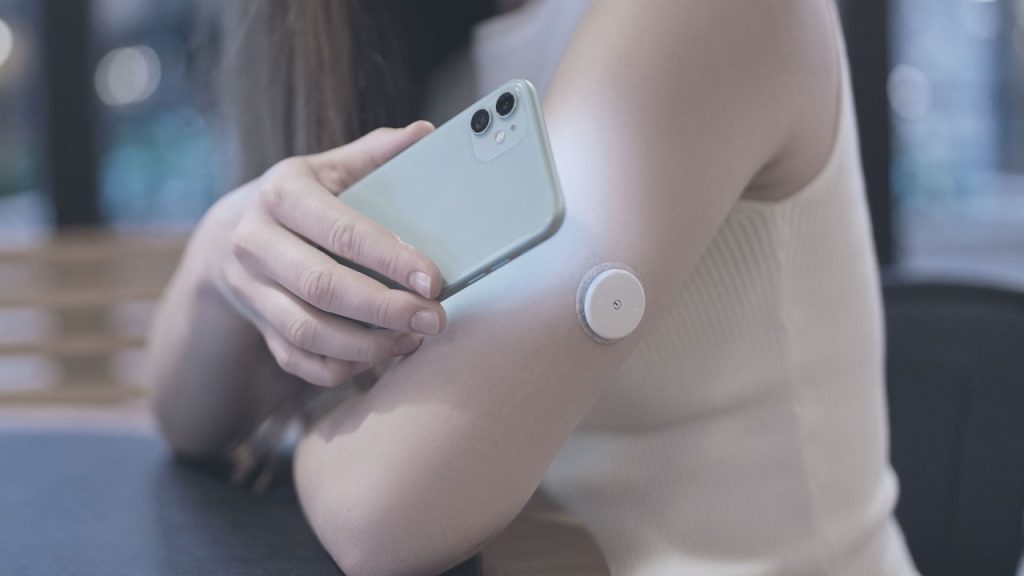
This guide examines case studies in detail and identifies lessons on regulatory pathways, software architecture, and platform strategy that biosensor and CGM hardware companies can apply to their own OTC roadmaps.
OTC medical device commercialization is the process of bringing a regulated medical device to market for direct sale to consumers without a prescription. For connected device and biosensor makers, it has become a practical growth route since the FDA cleared the first over-the-counter continuous glucose monitor in March 2024. As regulatory frameworks evolve and consumer demand for proactive health monitoring surges, forward-thinking MedTech companies are exploring how to bring regulated products once available only by prescription directly to market.
The Stelo and Lingo launches in 2024 are the cleanest case studies available for understanding how this transition actually works in practice. Stelo became the first OTC CGM cleared by the FDA in March 2024. Lingo followed in May 2024, but with a deliberately different regulatory and commercial positioning. Below, we examine the pathways each company chose, the software architecture decisions that shaped their products, and what device makers, biosensor developers, and mobile medical app innovators can learn from the two leaders’ approaches to the same opportunity.
Stelo vs Lingo vs Libre Rio: OTC CGM Comparison
Stelo (Dexcom) |
Lingo (Abbott) |
Libre Rio (Abbott) |
|
|---|---|---|---|
FDA decision |
March 5, 2024 |
May 29, 2024 |
June 7, 2024 |
Pathway and predicate |
510(k); Dexcom G7 |
510(k); FreeStyle Libre 2 |
510(k); FreeStyle Libre 2 |
Review time, receipt to decision |
74 days |
197 days |
184 days |
Intended users |
Not on insulin; age 18 and older at clearance, age 2 and older since June 2026 |
Age 18 and older, not on insulin |
Age 18 and older, not using insulin; Abbott positions it for Type 2 diabetes |
Sensor wear |
Up to 15 days |
Up to 14 days |
Up to 15 days |
Alerts and alarms |
None |
None |
Not checked |
US launch |
August 26, 2024, on Stelo.com |
September 5, 2024, on hellolingo.com |
No launch announced by Abbott |
Launch price |
$99 for two sensors, or $89 a month |
$49 for one sensor, $89 for two, $249 for six |
Not announced |
Industry Shift: Why OTC Medical Device Commercialization for Connected Devices?
The MedTech landscape is undergoing rapid transformation, with OTC medical device commercialization emerging as a powerful strategy to expand market reach and accelerate adoption.
Driven by advances in biosensor technology, mobile medical apps, and consumer health awareness, more connected devices are moving beyond traditional prescription channels. This shift is not only opening new revenue opportunities but is also reshaping how medical device companies design, regulate, and deliver their products.
Regulatory Changes Enabling OTC Medical Device Commercialization Pathways
In the United States, the FDA has published considerations for manufacturers of over-the-counter devices and has cleared several over-the-counter glucose sensors since 2024.
An over-the-counter device must carry adequate directions for use, meaning directions that a layperson can follow to use it safely. That makes usability evidence central: Biolinq’s over-the-counter clearance for the Shine was supported through human factors evaluations. This is because:
- SaMD regulatory pathways are evolving to accommodate hybrid clinical-consumer use cases.
- Devices that integrate with secure, device-agnostic platforms can more easily meet compliance requirements for data privacy and interoperability.
- OTC classification can often be pursued in parallel with prescription indications, allowing companies to serve both markets.
These changes have lowered the barriers to entry for connected medical devices and mobile health apps to enter the consumer space without sacrificing regulatory rigor.
Benefits of OTC Medical Device Commercialization for Connected Devices
For manufacturers of biosensors, wearables, and mobile medical apps, the shift to OTC distribution offers significant advantages, including:
- Expanded Market Reach – OTC status opens access to consumer markets far beyond clinical patient populations.
- Faster Adoption Cycles – Direct-to-consumer sales reduce dependence on physician adoption and reimbursement policies.
- Brand Visibility and Loyalty – Early consumer exposure helps build brand recognition that can influence clinical adoption later.
- Data-Driven Insights – OTC use increases data volume, which can inform product improvements, clinical research, and personalized care strategies.
OTC readiness depends on more than consumer demand alone. It requires strategic planning across regulatory, technical, and commercialization dimensions.
What strategic planning looks like in practice is best understood through example. The Stelo and Lingo OTC launches both succeeded, but they made different choices regarding regulatory, platform architecture, and commercial positioning. The case studies below break each one down.
Case Study: Dexcom Stelo – The First In OTC Medical Device Commercialization
On March 5, 2024, the FDA cleared Dexcom’s Stelo Glucose Biosensor System as the first over-the-counter continuous glucose monitor in the United States. The clearance opened a category that didn’t previously exist: direct-to-consumer CGM sales without a prescription, and gave Dexcom a roughly three-month head start over Abbott’s Lingo. The decisions Dexcom made along the way are instructive for any hardware company considering an OTC pivot.
Regulatory Pathway: 510(k) on an Established iCGM Predicate
Stelo entered the OTC market through the 510(k) clearance pathway as an integrated CGM (iCGM), leveraging Dexcom’s existing G7 platform as the predicate for substantial equivalence. This was a practical choice. Stelo isn’t a fundamentally new sensor architecture; it’s a repositioned variant of an established CGM stack, with software and labeling adjusted to a non-prescription use case. By staying within the 510(k) framework, Dexcom avoided the longer review timelines associated with De Novo classification, and the FDA’s existing comfort with the underlying iCGM technology made clearance achievable within a relatively compressed timeframe.
The clearance was based on a clinical study demonstrating that Stelo performed comparably to other integrated CGM devices already on the market. Indication at clearance: adults aged 18 and older who do not use insulin. In June 2026, the FDA expanded it to people aged 2 and older who are not on insulin, with caregiver supervision required for those under 18, and individuals without diabetes interested in tracking glucose for general health awareness. Notably, Stelo is not indicated for users with problematic hypoglycemia; the device does not include hypoglycemia alerts, which simplified the regulatory submission but also defines the product’s commercial boundaries.
Software Architecture: Inheriting the G7 Stack, Adjusting the App
Stelo’s software architecture inherits substantially from Dexcom’s G7 platform. According to the FDA’s decision summary, Stelo and the G7 use the same sensor, patch, applicator, and transmitter hardware, and the Stelo app is built on the same software development kit. The algorithm was modified to support the longer wear period. What changed: a new companion app designed specifically for OTC users (different UX, different features, different educational onboarding), 15-minute reading frequency instead of G7’s 5-minute default, 15-day wear time, and the deliberate omission of hypoglycemia alarm functionality. The app reads glucose data, presents it with trend arrows, and offers contextual education, but does not provide treatment recommendations.
The strategic insight here is reuse. Building Stelo on the G7 foundation meant Dexcom didn’t have to validate a new sensor lifecycle or build a new BLE protocol. Building Stelo on the G7 hardware meant Dexcom could rely on an already cleared device as its predicate, rather than starting with a new sensor design. The OTC variant inherited the regulatory and engineering scaffolding. For hardware companies considering an OTC pivot, this is the path of least resistance: an OTC product built on an existing prescription platform reaches the market faster than an OTC-first design built from scratch.
Commercial Positioning: Direct-to-Consumer With Healthcare Provider Bridges
Dexcom positioned Stelo as a direct-to-consumer product available exclusively online at launch. The pricing model is subscription-based; users buy a monthly supply of sensors. Distribution started through Dexcom’s own e-commerce channel, with retail partnerships expanding over time. Dexcom described the target audience at launch as the 125 million Americans with Type 2 diabetes not using insulin and those with prediabetes.
What’s notable about the positioning is that Dexcom didn’t try to bypass healthcare providers entirely. Stelo’s marketing acknowledges the value of clinician involvement and includes onboarding content that encourages users to share their data with healthcare providers. This dual-track positioning, direct-to-consumer purchasing with healthcare-provider integration, is increasingly common for OTC connected devices and points to a hybrid commercial model that hardware companies should plan for.
What Hardware Companies Can Learn from Stelo
Three lessons stand out for hardware companies evaluating the commercialization of OTC medical devices.
- First, an OTC product built on an existing FDA-cleared platform reaches market faster than an OTC-first design—Stelo’s 510(k) substantial equivalence pathway, leveraging the G7 predicate, materially compressed the regulatory timeline.
- Second, the software architecture decisions that simplify OTC regulatory submissions (removing alert functionality, narrowing the indication, simplifying the UX) also shape commercial positioning—these aren’t separate workstreams; they’re the same workstream.
- Third, the OTC pivot doesn’t require abandoning the prescription channel—Dexcom continues to sell G7 by prescription while serving the OTC market through Stelo, and the two products use the same underlying technology stack.
Case Study: Abbott Lingo – The Wellness Positioning Play
Abbott’s Lingo received FDA 510(k) clearance on May 29, 2024, roughly three months after Stelo. But Lingo wasn’t simply Abbott’s response to Dexcom in the same product category. Abbott deliberately chose a different positioning: Lingo is a wellness bio-wearable for general consumers, not a diabetes management product. That distinction shaped every aspect of how the product was developed, regulated, and brought to market. (Abbott also received FDA clearance for Libre Rio nine days later, on June 7, 2024, and announced both products together on June 10, which is the diabetes-targeted equivalent of Lingo and competes more directly with Stelo. We focus on Lingo specifically because the wellness-positioning choice carries the most interesting strategic lessons.)
Regulatory Pathway: 510(k) on the FreeStyle Libre Predicate
Like Stelo, Lingo reached the market through 510(k) clearance—but built on the FreeStyle Libre 2 platform as the substantial equivalence predicate rather than a brand-new device. The wellness positioning shapes the indication: Lingo is cleared for adults 18 and older who do not use insulin and want to track glucose levels for general health and wellness. It is explicitly not indicated for diabetes management; that’s Libre Rio’s territory.
This indication framing is the most strategically interesting part of Lingo’s regulatory story. Lingo’s wellness positioning is a labeling and marketing choice. In regulatory terms, it is a Class II integrated CGM cleared through the 510(k) pathway, the same classification as Stelo. The trade-off is that the wellness positioning constrains the kinds of clinical claims Abbott can make about the product. The labeling is deliberately non-clinical: Lingo helps users “understand” how food, exercise, sleep, and stress affect their glucose patterns, but does not prescribe specific actions.
Software Architecture: Coaching-First, Not Clinical-First
Lingo’s software is built around a coaching-and-insights paradigm rather than a clinical-data-display paradigm. The companion app emphasizes a metric called Lingo Count—a daily score reflecting glucose response to lifestyle factors — and offers personalized coaching content based on the user’s patterns. The sensor itself is based on the FreeStyle Libre 2 hardware, with a 14-day wear time and continuous data streaming to the iOS app (Android support to follow later in the rollout).
The architectural decision worth flagging is that Lingo’s software stack is meaningfully different from Abbott’s clinical Libre apps. The data is the same; the presentation, coaching layer, and engagement design are reworked from the ground up for consumer wellness use. This costs more to develop than simply adapting the clinical app would, but it also makes the wellness positioning more credible. Hardware companies underestimating the software work required to credibly transition to wellness positioning typically end up shipping a clinical app with consumer branding, which doesn’t resonate with either audience.
Commercial Positioning: Premium Wellness, Retail-First Distribution
Lingo launched at $49 for one sensor, $89 for two, and $249 for six. Stelo launched at $99 for two sensors, or $89 per month with a subscription. The two were priced closely; the difference was in brand and audience, not price. Lingo launched on Abbott’s own site, hellolingo.com. Abbott now lists Amazon, Walmart, Walgreens, BestBuy.com, and Publix as well. A meaningful presence in pharmacy and big-box retail signals that Abbott is treating Lingo as a true consumer product, not a clinical tool with a consumer wrapper. The brand work reflects this: the Lingo brand identity is distinct from Abbott’s diabetes-care brand, the website (hellolingo.com) doesn’t share visual identity with FreeStyle Libre, and the marketing language centers on metabolic health and wellness rather than clinical management.
This is a commercial-strategy distinction worth examining: Stelo positioned as accessible diabetes care for an underserved population; Lingo positioned as a premium wellness product for a different audience entirely. Both are OTC CGMs based on existing FDA-cleared platforms, but they aim at different buyers, occupy different shelf space, and command different price points.
What Hardware Companies Can Learn from Lingo
Three lessons stand out from Lingo.
- First, regulatory positioning is also commercial positioning – Abbott’s choice to scope Lingo as wellness rather than diabetes opened a different (and much larger) addressable market and shaped every downstream decision.
- Second, software architecture has to credibly support the positioning – a wellness product needs a coaching-first software experience, not a clinical-display app with consumer skinning.
- Third, OTC and prescription products can coexist as separate brands with distinct identities – Lingo and FreeStyle Libre share underlying hardware but operate as distinct commercial products with different audiences, distribution, and price points.
Two Newer OTC Pathways: Biolinq Shine and Signos
OTC medical device commercialization no longer runs only through an existing prescription CGM. Two clearances since 2025 show other routes.
Biolinq Shine: De Novo first, then over the counter. Biolinq had no predicate for its intradermal glucose sensor, so it used the De Novo pathway. The FDA received the request on December 27, 2024 and granted it on September 23, 2025, as a prescription device. Biolinq then filed a 510(k) for over-the-counter use with its own De Novo as the predicate. The FDA received it on July 27, 2026 and cleared it on September 18, 2026, 53 days later. The lesson for device makers: a De Novo creates the predicate that makes the later over-the-counter step fast.
Signos: an over-the-counter app on another company’s sensor. In March 2025 the FDA cleared the Signos Glucose Monitoring System, an over-the-counter software product with Stelo as its predicate. It uses the sensor already cleared with Stelo, and the sensor is not part of the Signos clearance. The lesson: software alone can be the over-the-counter product when it builds on a cleared sensor.
Strategic Planning for Your OTC Pivot
The Stelo and Lingo case studies show that OTC medical device commercialization isn’t a single playbook—it’s a set of strategic choices that have to align across regulatory, software, and commercial dimensions. The four areas below frame the decisions hardware companies need to make explicitly before development of an OTC variant begins. In our experience, getting these wrong typically costs six to twelve months of rework once the misalignment becomes apparent.
Regulatory Strategy: 510(k) Predicate or De Novo?
Both Stelo and Lingo reached the OTC market through 510(k) clearance, leveraging an existing FDA-cleared platform as the predicate for substantial equivalence. This is the fastest path. For hardware companies with an existing prescription product, an OTC variant built on the same underlying technology can typically use the prescription product as the predicate, thereby meaningfully compressing the regulatory timeline. For hardware companies without a predicate, the De Novo classification pathway is available. De Novo review takes longer. The FDA’s goal is to issue decisions on 95% of 510(k) submissions within 90 FDA days and on 70% of De Novo requests within 150 FDA days. Calendar time is often longer: the Biolinq Shine De Novo took about nine months from receipt to decision. The strategic question to answer early: do we have an existing FDA-cleared platform that can serve as a predicate, or are we building an OTC-first platform?
Indication Scoping: Diabetes vs Wellness vs Both
Lingo’s wellness scoping and Stelo’s diabetes-management scoping represent two ends of a spectrum. The wellness end opens a larger total addressable market and avoids some clinical evidence requirements, but it constrains the clinical claims the product can make. The diabetes end requires more clinical validation but enables direct clinical positioning and access to diabetes-specific marketing channels. Some hardware companies are exploring both simultaneously—Abbott did, with Lingo for wellness and Libre Rio for diabetes, cleared nine days after Lingo. Splitting into two products costs more development effort but gives the company exposure to both markets without diluting either.
Software Architecture: Reuse or Rebuild?
Both Stelo and Lingo inherited substantially from existing platforms—Stelo from the G7 stack, Lingo from FreeStyle Libre 2. Reuse compresses development time but constrains the OTC product’s design space; the inherited architecture has to actually fit the OTC use case, not just be technically reusable. The opposite path—building an OTC-first software stack from scratch—gives complete design freedom but adds development time and regulatory complexity (the new stack has to be validated independently). For most hardware companies, partial reuse is the right answer: keep the sensor algorithm, BLE infrastructure, and underlying data model, but build a new companion app and coaching layer specifically for the OTC use case.
Commercial Positioning: Channel, Price, and Brand
Direct-to-consumer e-commerce, retail pharmacy, big-box retail, subscription versus one-time purchase, and branded as a separate product or as a variant—these are the commercial strategy decisions that shape OTC positioning. Stelo went accessible-pricing, online-first, with subscription delivery aimed at uninsured Type 2 diabetics. Lingo went premium-pricing, distinct-brand, with retail-pharmacy expansion aimed at health-conscious consumers. Hardware companies need to make these decisions before the product launches, not after—the software, packaging, marketing, and distribution all flow from the positioning choice.
Key Takeaways for Biosensor and CGM Hardware Companies
The 2024 OTC launches of Stelo and Lingo establish the playbook for OTC CGM commercialization. The patterns are now visible enough to extract for other hardware companies considering similar pivots.
- OTC pivots built on existing FDA-cleared platforms reach market faster. Both Stelo and Lingo used 510(k) substantial equivalence pathways, referencing existing prescription products. OTC-first designs without a predicate face longer De Novo timelines.
- Indication scoping is a strategic choice with downstream consequences. Wellness scoping (Lingo) opens a larger market but constrains clinical claims. Diabetes scoping (Stelo) requires more clinical evidence but enables direct clinical positioning.
- Software architecture has to support the chosen positioning. Wellness products need coaching-first apps; diabetes products need clinical-information apps. Skinning a clinical app for consumers fails with both audiences.
- Hybrid commercial models are normal. Both companies maintain prescription products alongside their OTC variants. The OTC pivot doesn’t require abandoning the prescription channel—it requires running both well. Partial software reuse is the right balance. Keep sensor algorithms, BLE, and the data model from the prescription product. Build a new companion app and coaching layer for the OTC variant. Full reuse constrains the OTC product; full rebuild wastes the existing investment.
Frequently Asked Questions About OTC CGM Commercialization
What was the first FDA-cleared OTC CGM?
Dexcom’s Stelo Glucose Biosensor System was the first OTC CGM to receive FDA 510(k) clearance on March 5, 2024. Adults aged 18 and older who do not use insulin. In June 2026, the FDA expanded it to people aged 2 and older who are not on insulin, with caregiver supervision required for those under 18. It is based on Dexcom’s G7 CGM platform, with software adjustments for non-prescription use. Abbott’s Lingo received FDA clearance approximately three months later, on May 29, 2024, with deliberately different wellness-focused positioning.
What FDA pathway do OTC CGMs use?
Both Stelo and Lingo reached the OTC market through 510(k) premarket notification—leveraging existing FDA-cleared CGM platforms (G7 and FreeStyle Libre 2, respectively) as substantial-equivalence predicates. The 510(k) pathway is faster than De Novo classification because it leverages the FDA’s existing familiarity with the underlying technology. Hardware companies without an existing predicate can use the De Novo pathway for OTC CGMs. De Novo review takes longer. The FDA’s goal is to issue decisions on 95% of 510(k) submissions within 90 FDA days and on 70% of De Novo requests within 150 FDA days. Calendar time is often longer: the Biolinq Shine De Novo took about nine months from receipt to decision.
What’s the difference between Stelo and Lingo?
Stelo is positioned for adults with Type 2 diabetes managed without insulin, with FDA labeling that supports general health awareness as a secondary use. Lingo is positioned exclusively as a wellness biowearable for general consumers—its FDA clearance does not include diabetes management as an indication. Both are 510(k)-cleared OTC CGMs and use similar 14–15-day-wear sensors, but they target different audiences, occupy different shelf space, and command different price points. Abbott’s Libre Rio (cleared nine days after Lingo) is the more direct comparison to Stelo for diabetes-targeted OTC CGM.
Can a hardware company sell the same CGM both OTC and by prescription?
Yes. Both Dexcom and Abbott maintain prescription CGM products (G7 and FreeStyle Libre series) alongside their OTC variants. The two products typically share underlying technology—sensor algorithms, BLE protocol, data models—but use different companion apps, marketing, distribution channels, and often different pricing structures. Maintaining both channels is increasingly common for OTC connected device strategy. The FDA says that switching a cleared prescription device to over-the-counter use likely requires a new premarket submission. In practice, Dexcom and Abbott each hold separate clearances for their prescription and over-the-counter products.
How long does it take to develop an OTC version of an existing prescription CGM?
For hardware companies with an existing FDA-cleared CGM that can serve as a predicate, developing an OTC version typically takes 12 to 18 months to achieve FDA clearance. This includes companion app rework, OTC-specific labeling and packaging, a clinical-equivalence study (for the 510(k) submission), FDA submission preparation, and the review timeline. Companies without a predicate using the De Novo pathway should plan for 18-30 months. Companies using a Platform-as-a-Service software foundation can typically compress these timelines by 4 to 6 months by inheriting regulatory groundwork rather than rebuilding it.
Does an OTC CGM need to follow IEC 62304 and ISO 13485?
Yes. OTC status changes the labeling and prescription requirements but does not change the underlying medical device software and quality management requirements. OTC CGMs cleared through 510(k) are still medical devices subject to IEC 62304 (software lifecycle), ISO 13485 (quality management system), ISO 14971 (risk management), and FDA 21 CFR Part 524B cybersecurity premarket requirements. The OTC indication may simplify some clinical evidence requirements, but the engineering and quality framework that produced the prescription predicate must also produce the OTC variant.
Is an OTC CGM a general wellness product?
No. Over-the-counter CGMs such as Stelo and Lingo are Class II medical devices cleared by the FDA. The FDA’s general wellness policy does not cover products that penetrate the skin.
Planning an OTC Pivot? Talk to a Specialist Partner
OTC commercialization isn’t a software project or a regulatory project—it’s both, and the two have to align from the start. Indication scoping shapes software architecture. Software architecture shapes commercial positioning. Commercial positioning shapes regulatory strategy. Hardware companies that treat these as sequential workstreams typically end up with misalignment that costs months to fix.
Sequenex builds OTC and prescription medical device software side by side, inside an ISO 13485-certified QMS, with regulatory strategy and software architecture coordinated from sprint zero. Whether you’re considering an OTC variant of an existing prescription product or building an OTC-first product, we can help map the path and execute the underlying engineering work.
